The signals owners usually miss
Most dog owners think they know when their dog is happy. Wagging tail, relaxed mouth, easy to read. But stress and fear often look nothing like what people expect, and that’s usually where trouble starts. It’s not that the dog “suddenly” reacted. The warning signs were there for ten minutes before anyone noticed.
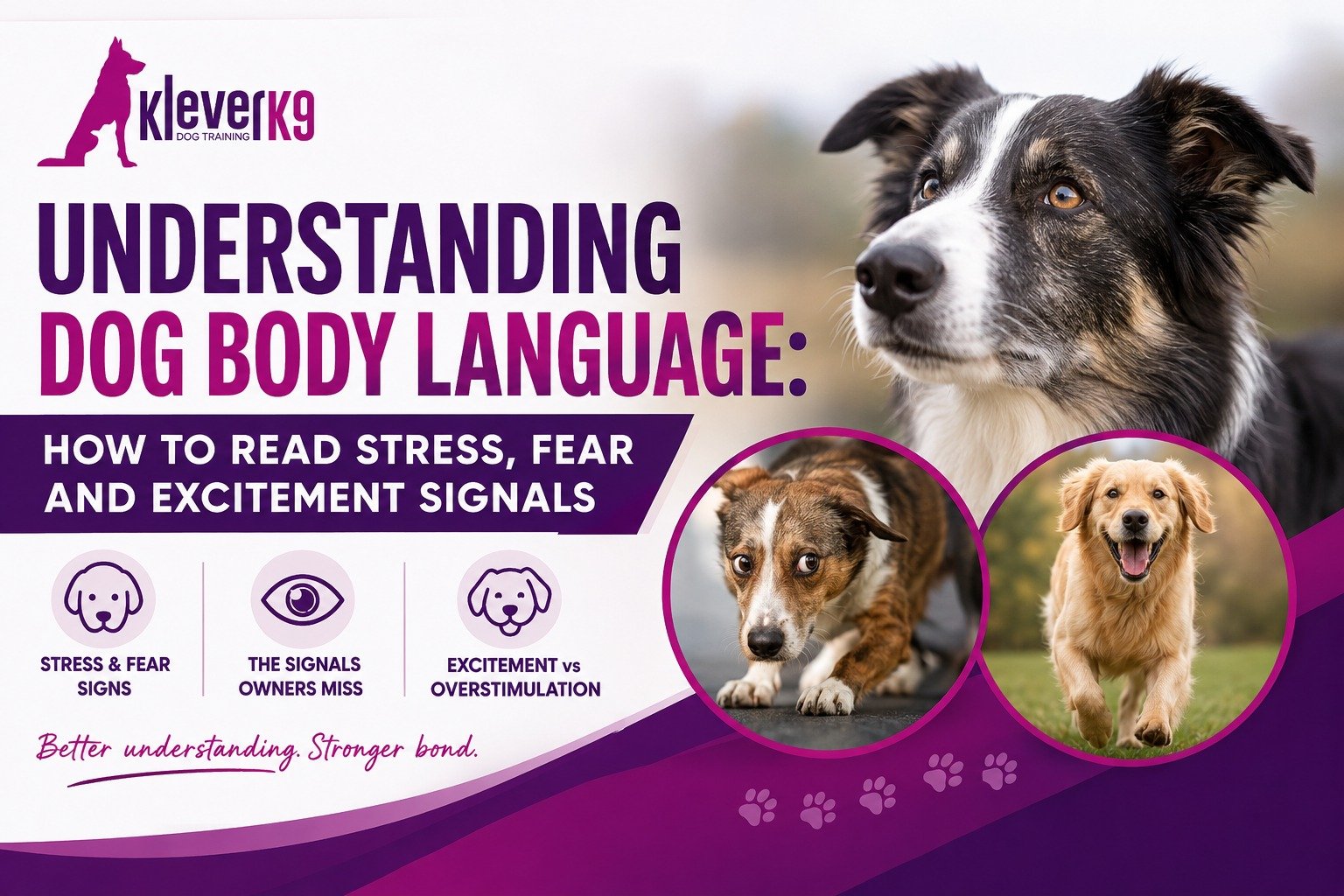
A stressed dog isn’t always cowering in a corner. Sometimes it’s a dog standing perfectly still with its weight shifted slightly back, ears pinned, tail low and stiff rather than tucked. Watch for these appeasement signals:
- Lip licking when there’s no food around
- Yawning when the dog clearly isn’t tired
- A “whale eye,” where you can see the whites of the eyes as the dog turns its head away but keeps watching sideways
These are the dog’s way of saying it’s uncomfortable and would like some space, thank you very much.
Telling excitement from overstimulation
Excitement can be trickier to separate from anxiety than people assume. A dog that’s genuinely thrilled will usually have loose, wiggly body language, with the whole back end moving, not just the tail. Play bows, where the front legs drop and the rear stays up, are a clear invitation.
Compare that to a dog that’s overstimulated to the point of being wound up. Tight movements, jumping that feels frantic rather than joyful, and barking that doesn’t let up when you’d expect it to settle are all signs of that. Both dogs might look “excited” at a glance. Only one of them is having a good time.
Why fear shows up before the growl
Fear is the one owners tend to miss until it escalates into growling or snapping, and by then the dog has usually tried several quieter signals first. Trembling, hiding behind your legs, a tucked tail, and freezing in place all come before the growl, not after.
A growl is actually useful information, not a behaviour to punish out of existence. It’s the dog telling you where its limit is. Take that warning away and you’re left with a dog that goes straight to biting because it has learned that growling doesn’t get it anywhere.
Learning your own dog’s patterns
Reading these cues in real time takes practice, and it helps enormously to watch your own dog on walks, at the park, and around visitors, just noting what its body is doing before anything happens. Over a few weeks you’ll start to notice your dog’s specific patterns, since every dog has slightly different tells.
If you’re working through a reactivity issue or just want a second set of trained eyes on your dog’s signals, in house sessions where a trainer watches your dog in its own environment tend to pick up far more than a quick chat at the vet ever could. That’s really the value of working with someone locally who can spend real time observing your dog doing ordinary things, like walking, greeting people, and settling at home, rather than judging behaviour from a single stressful moment.