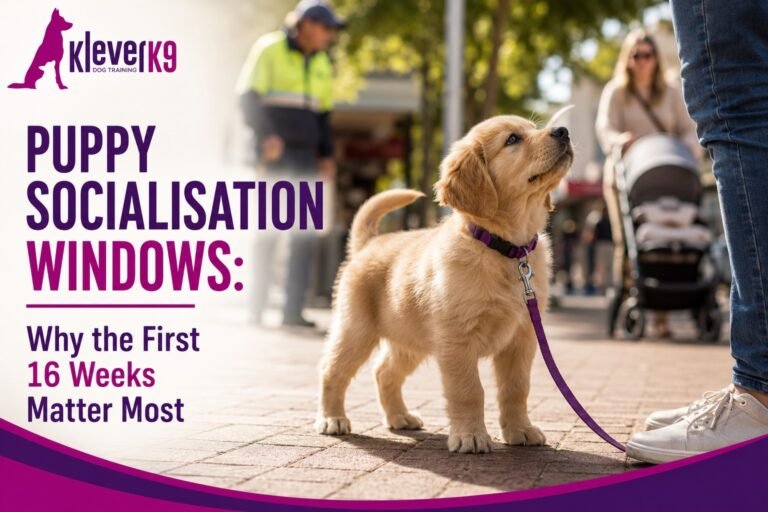
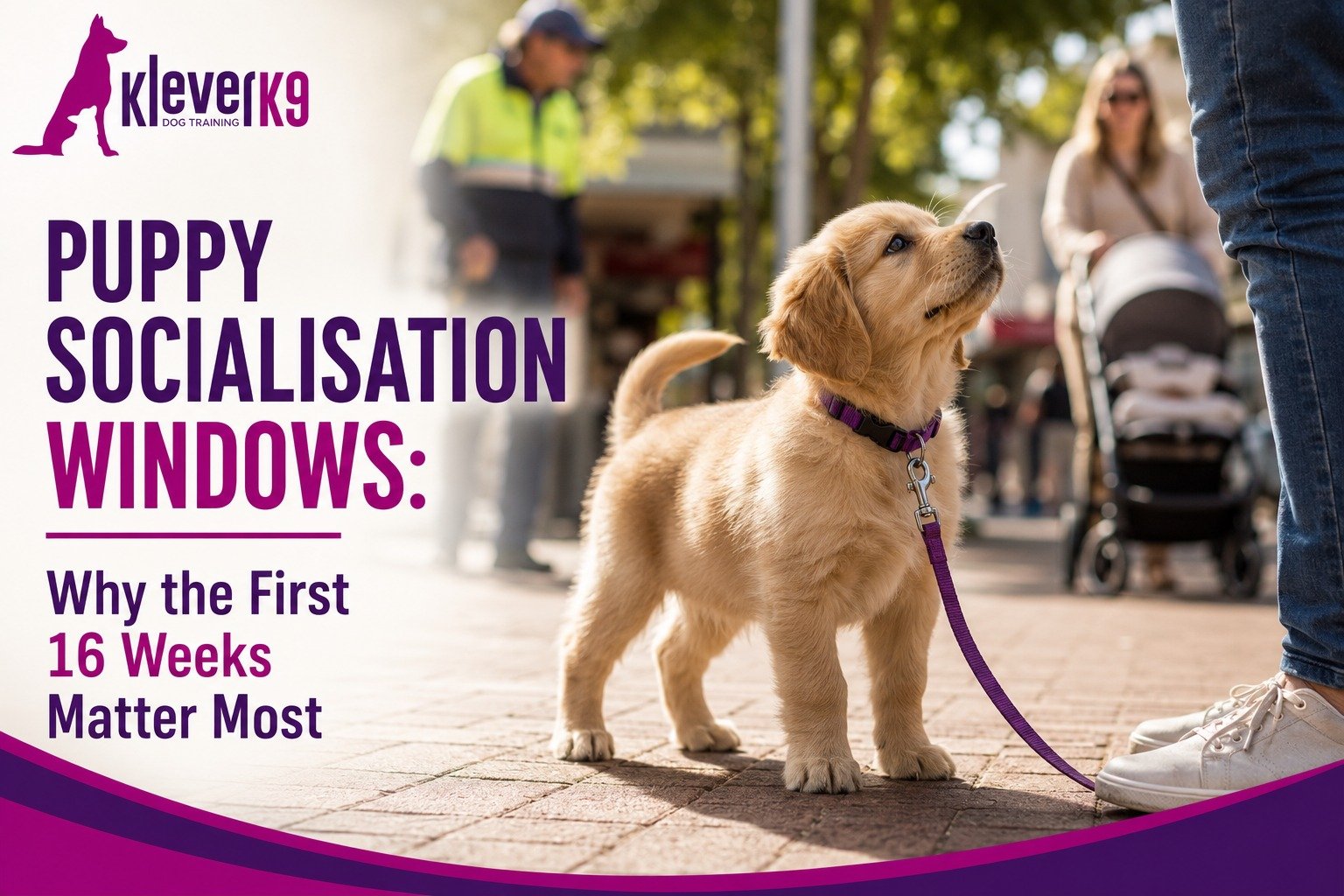
There’s a stretch of a puppy’s life that shapes almost everything about the adult dog they become. It’s short, it closes quietly, and most owners only learn about it after it’s gone.
That window runs from roughly three to sixteen weeks. What happens in it matters more than anything you do later.
What the Socialisation Window Actually Is
During this period, a puppy’s brain is unusually open to new information. Novel things get filed as normal rather than as threats.
Once the window narrows, the default flips. New experiences start getting treated with suspicion rather than curiosity. That’s a sensible survival mechanism in a wild animal. It’s less convenient in a dog who has to live with vacuum cleaners, skateboards and the postman.
This doesn’t mean a dog can’t learn after sixteen weeks. They absolutely can. It just takes far more work to build confidence later than it does to build it during the window.
What Happens When the Window Is Missed
Under socialised dogs tend to show up with a recognisable set of problems as adults.
Fear of strangers, particularly men, people in hats or high vis, and children. Reactivity toward other dogs on lead. Panic around traffic, bikes and loud noises. Difficulty being handled, which becomes a real issue at the vet and the groomer. Anxiety about surfaces they’ve never walked on, like metal grates or polished floors.
Most of these dogs aren’t aggressive by nature. They’re frightened, and fear behaviour looks like aggression to anyone standing nearby.
What Socialisation Actually Means
This is where most owners go wrong. Socialisation is not just meeting other dogs.
Socialisation means exposing a puppy to the widest possible range of experiences in a way that leaves them feeling safe and unbothered. The emotional outcome is the point, not the number of encounters.
A puppy dragged to a busy market and passed around by twenty strangers hasn’t been socialised. They’ve been overwhelmed, and they may well come away more nervous than they started.
Good Socialisation Looks Like
Short exposures at a comfortable distance. The puppy notices something new, has a moment to observe it, and stays relaxed. You reward the calm, and you leave before they get tired or stressed.
If the puppy is hiding, freezing, tucking their tail or refusing food, you’re too close or it’s too much. Back off and try again from further away.
A Practical Checklist for the First 16 Weeks
People
Men with beards. People wearing hats, sunglasses and hoods. High vis workwear. Umbrellas. People using walking sticks or wheelchairs. Children of different ages, calm and supervised. Delivery drivers.
Sounds
Vacuum cleaner. Washing machine. Doorbell. Traffic. Sirens. Thunderstorms, which you can introduce at low volume through a speaker. Lawn mower and whipper snipper.
Surfaces
Grass, concrete, tiles, floorboards, gravel, sand, metal grates, wet ground, stairs.
Handling
Paws touched and held. Ears looked into. Mouth opened gently. Collar grabbed calmly. Nails touched with clippers before any actual trimming. Being lifted and carried. Time in a crate and time in the car.
This one is worth real attention. A dog comfortable with handling makes vet visits and grooming enormously easier for the rest of their life.
Environments
The car. The vet clinic just to say hello and get a treat. Outside a shopping centre at a quiet time. A cafe. The footpath during school pick up, from a distance.
Other Dogs
Calm, vaccinated adult dogs who tolerate puppies well are worth more than a crowded puppy free for all. One good interaction with a stable adult dog teaches more than an hour of chaotic puppy wrestling.
The Vaccination Problem
Here’s the tension every new owner runs into. The socialisation window largely closes before the full vaccination course finishes.
Waiting until sixteen weeks to take a puppy anywhere means missing most of the window entirely. Veterinary behaviour bodies have been clear that the behavioural risk of under socialisation outweighs the disease risk in most suburban settings, provided you’re sensible.
Sensible means avoiding dog parks, avoiding areas with unknown dog traffic, and avoiding contact with unvaccinated dogs. It doesn’t mean keeping the puppy in the backyard.
Carry the puppy. Sit on a bench outside the shops with the puppy on your lap and let them watch the world. Drive them places and let them observe from the car with the window down. Invite vaccinated adult dogs to your house. Have visitors over.
You can do an enormous amount without your puppy’s paws touching public ground.
Fear Periods
Somewhere around eight to eleven weeks, and again in adolescence, puppies go through fear periods. During these stretches, a bad experience can leave a lasting impression.
If your puppy suddenly seems spooked by things that didn’t bother them last week, don’t force it. Reduce intensity, keep sessions positive, and wait it out. Pushing through a fear period is how you create a lasting phobia.
Quality Over Quantity
Three or four short, positive experiences a day beats one long outing. Five minutes of watching traffic from a safe distance is a full session for an eight week old puppy.
Keep a simple list on the fridge and tick things off. Most owners find they’ve covered less ground than they thought.
After Sixteen Weeks
The window narrowing isn’t a cliff edge. Keep the exposure going through adolescence, because dogs commonly regress somewhere between six and eighteen months.
A dog who was fine with everything at four months can become suspicious at nine months. That’s normal development, not a failure. Keep doing the work.
Get the Foundation Right
Klever K9 runs puppy focused sessions built around real socialisation rather than a checklist of tricks. If you’ve got a new puppy, the best time to get advice is now rather than in six months when the habits have set. Get in touch and we’ll help you use the window while it’s open.