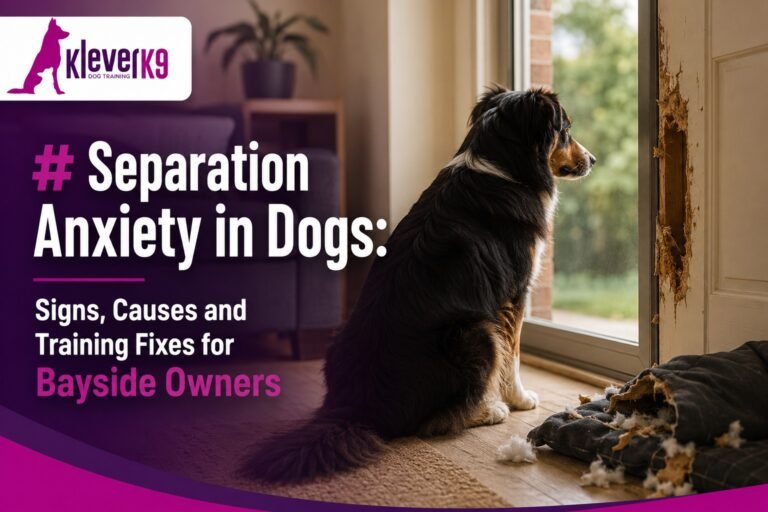
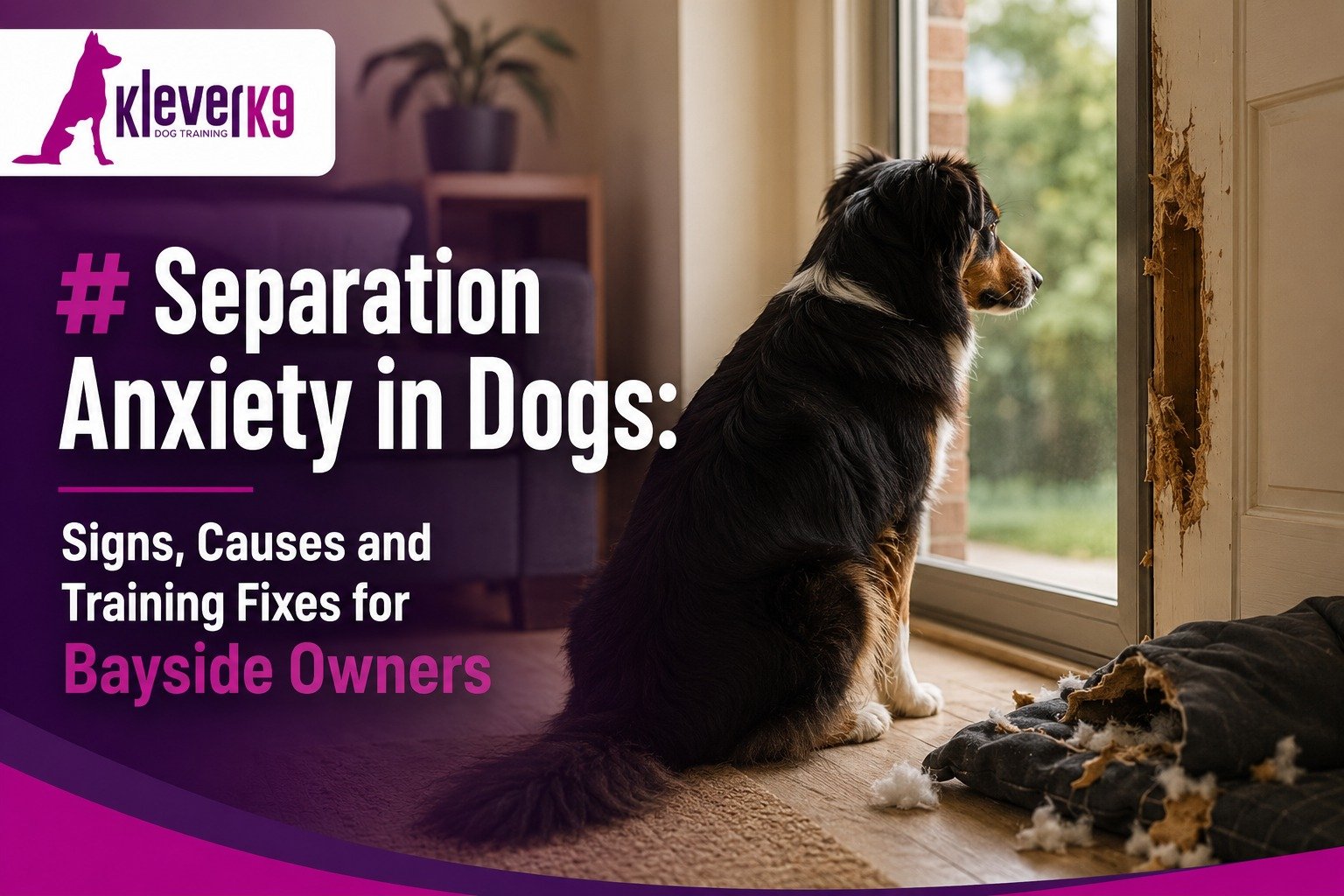
You leave for work, close the door, and within a minute the barking starts. Or you come home to a chewed door frame, a puddle by the entry and a dog who greets you like you’ve returned from a year at sea.
Separation anxiety is one of the most common problems dog owners bring to us, and one of the most misunderstood. It gets labelled as naughtiness, spite or boredom. It’s usually none of those things.
What Separation Anxiety Actually Is
Separation anxiety is a genuine panic response. The dog isn’t misbehaving because you left. The dog is distressed because it can’t cope with being alone, and the behaviour you’re seeing is what panic looks like in a species that can’t tell you what’s wrong.
That distinction matters, because the training approach for anxiety is completely different from the approach for boredom or under exercise. Punishment makes anxiety worse every time.
Signs to Look For
Some signs are obvious. Others get missed because they happen while you’re out.
While You’re Away
Persistent barking, howling or whining that starts within minutes of you leaving and continues rather than settling. Destructive behaviour focused on exit points, so doors, door frames, window sills and blinds rather than random items around the house. Toileting indoors in a dog who is otherwise reliably house trained. Attempts to escape, sometimes causing injury to paws or teeth. Excessive drooling, panting or pacing.
A camera is the single most useful tool here. Most owners are surprised by what they see in the first ten minutes after they leave.
Before You Leave
Dogs with separation anxiety often start reacting to departure cues. Picking up keys, putting on shoes, grabbing a bag or moving toward the door triggers pacing, whining or shadowing you from room to room.
When You Return
Frantic greeting that takes several minutes to settle, rather than a happy hello and a return to normal. Some dogs also refuse food while alone but eat immediately once you’re home, which is a strong indicator.
What Causes It
There isn’t one cause, but a few patterns come up repeatedly in Bayside households.
Changes in routine are a big one. Dogs adopted during periods when someone was home constantly, then faced with a return to office work, often struggle. Rehomed and rescue dogs carry a higher risk, particularly those who’ve had multiple homes.
Moving house, the loss of another pet, a new baby, a change in work hours or an owner returning to study can all trigger it. Some dogs are simply more predisposed, especially breeds bred for close human partnership.
Under socialisation as a puppy also plays a part. Dogs who never learned that being alone is normal and temporary tend to find it harder as adults.
What Doesn’t Work
Getting a second dog rarely fixes it. Dogs with separation anxiety are usually attached to their person, not to canine company generally. You often end up with two anxious dogs.
Punishing the mess or damage on arrival home doesn’t work either. The dog can’t connect your reaction to something that happened two hours earlier, and adding stress to an already anxious animal makes the underlying problem worse.
Long walks alone won’t solve it. Exercise helps a dog settle, but a tired anxious dog is still an anxious dog.
Crating without preparation can escalate things badly. For a dog who panics when alone, being confined removes the ability to move, and some dogs injure themselves trying to get out.
Training Approaches That Do Work
Break Down the Departure Cues
Start by making your pre departure routine boring. Pick up your keys and sit down. Put your shoes on and make a coffee. Open the front door and close it again without leaving.
Repeat these dozens of times across a week, at random moments, without leaving. The goal is to strip the emotional meaning out of the cues so the dog stops winding up before you’ve even gone.
Build Duration From Almost Nothing
This is where most owners go wrong. They start at twenty minutes because that feels short to a human.
Start where the dog can succeed, which for a severely affected dog might be five seconds on the other side of a closed door. Return before any distress starts. Build in small increments, and always work below the threshold where panic begins.
Progress isn’t linear. Some days you’ll go backwards, usually after a disrupted routine or a stressful event. That’s normal.
Change What Alone Time Means
Give the dog something genuinely good that only happens when you leave. A stuffed and frozen food toy, a long lasting chew, or a snuffle mat with breakfast scattered through it.
The point isn’t distraction. The point is building a positive association with the moment of departure, and giving the dog something to do in the first critical minutes.
Create a Safe Space
Many dogs settle better in a smaller, familiar area rather than having the run of the house. A room with their bed, background noise from a radio, and no visual access to the front door works well for a lot of dogs.
Introduce this space while you’re home first, so it isn’t only associated with being left.
Keep Arrivals Low Key
Come in calmly. Don’t make a fuss. Wait until the dog settles before greeting properly.
It feels harsh at first. It teaches the dog that comings and goings are ordinary rather than emotional events.
When to Get Professional Help
If your dog is injuring itself, if the distress starts within seconds of you leaving, or if you’ve been working on it for weeks without progress, get a trainer involved.
Severe cases sometimes benefit from working alongside your vet, because medication can lower anxiety enough for training to actually take hold. That’s not a failure or a shortcut. For some dogs it’s the thing that makes the training possible.
A trainer will also help you identify your dog’s actual threshold, which is nearly impossible to judge accurately from the inside.
Realistic Timeframes
Mild cases often improve within a few weeks of consistent work. Moderate to severe cases usually take months.
The households that succeed are the ones who commit to short daily sessions rather than intensive weekend efforts. Consistency beats intensity here.
Support for Bayside Dog Owners
Klever K9 works with anxious dogs across the Bayside area, in the home where the behaviour actually happens. We’ll assess what’s really going on, set a realistic plan, and coach you through the parts that are easy to get wrong.
Reach out for an in home assessment.