Where the “alpha dog” idea came from
There’s still a fair bit of “alpha dog” talk floating around dog training circles, even though the research behind it has been picked apart for years. The dominance theory came largely from a 1970s study of captive wolves that weren’t even related to each other, thrown together in an unnatural setting that produced unnatural, tense hierarchy behaviour.
Wild wolf packs, it turns out, function more like families, with parents guiding offspring rather than constantly asserting rank through force. The whole “be the alpha” framework dog owners were told to follow was built on a flawed premise from the start.
What confrontational methods actually do
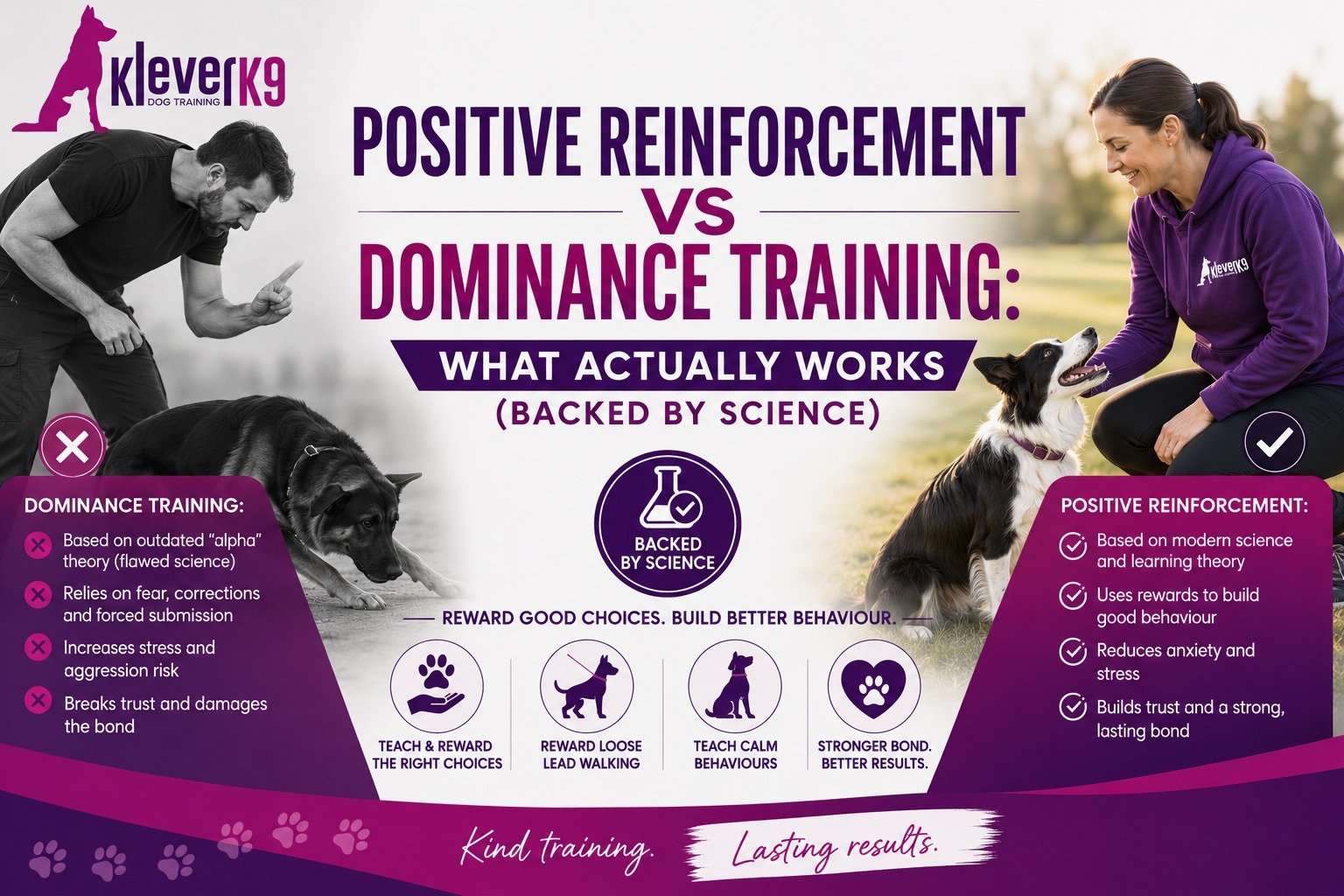
That matters because dominance based training methods, things like alpha rolls, forced submission, and physical corrections for disobedience, were justified using that faulty science. Studies since then, including research published through applied animal behaviour journals, have consistently found that confrontational methods increase the likelihood of aggressive responses in dogs rather than reduce them.
A dog pinned to the ground doesn’t learn to trust the person doing the pinning. It learns that hands and people can be unpredictable and frightening, which is the opposite of what most owners actually want.
How positive reinforcement actually works
Positive reinforcement works on a much simpler mechanism. Behaviour that gets rewarded happens more often, and behaviour that doesn’t get rewarded, or gets redirected, tends to fade. This isn’t about being a pushover or letting a dog run the household. A well structured positive reinforcement program has clear boundaries, consistent expectations, and plenty of structure.
The difference is in how those boundaries get taught:
- Instead of punishing a jump up, you teach and reward four paws on the floor
- Instead of correcting a dog for pulling on lead, you reward the choice to walk beside you
The results, and why timing matters
The results tend to speak for themselves over time. Dogs trained with reward based methods generally show less anxiety, fewer stress behaviours, and a stronger working relationship with their owner, because the dog isn’t operating out of fear of what happens if it gets something wrong. That matters a lot for reactive or anxious dogs specifically, since adding fear or physical correction into the mix with a dog that’s already anxious tends to make the underlying problem worse, even if the visible behaviour temporarily stops.
None of this means training is always gentle and slow. Clear communication, consistency, and timing are still everything, since a reward given three seconds too late teaches the dog nothing useful. That’s where working with an experienced trainer helps, someone who can read what your particular dog needs and adjust the approach on the spot rather than following a rigid script. Private, in home training sessions are particularly good for this, since the trainer sees your dog behaving normally in its actual environment rather than performing for an audience at a group class.