A dog who comes running in the kitchen may suddenly become difficult to reach at the park. The cue has not necessarily disappeared. Outside, it competes with other dogs, birds, unfamiliar smells and the excitement of having room to move.
Recall training teaches your dog that returning to you is consistently worthwhile. It also requires sensible management while the skill develops. A lead, a secure space and careful choices about distractions protect your dog during the learning process. No recall cue is a guarantee against traffic or other hazards.
Choose a cue everyone will use
Pick a short word or phrase that your household can say consistently. “Come” and “here” can both work. The particular word matters less than the history you build around it.
If your current cue has been repeated endlessly while the dog ignores it, a trainer may suggest starting fresh with another word. That is a chance to teach a clear response, not a reason to change the cue whenever training gets difficult.
Agree on the same approach with everyone who handles the dog. One person rewarding a prompt return while another calls only for something the dog dislikes makes the lesson harder to understand. Children should practise with an adult in a safe, controlled setting.
Make returning rewarding at home
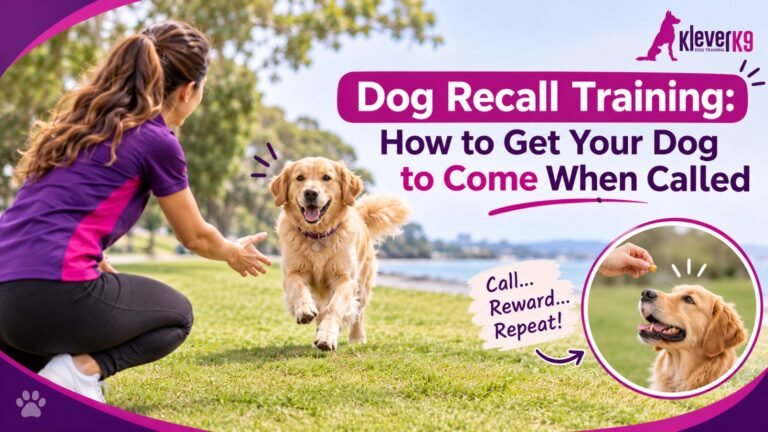
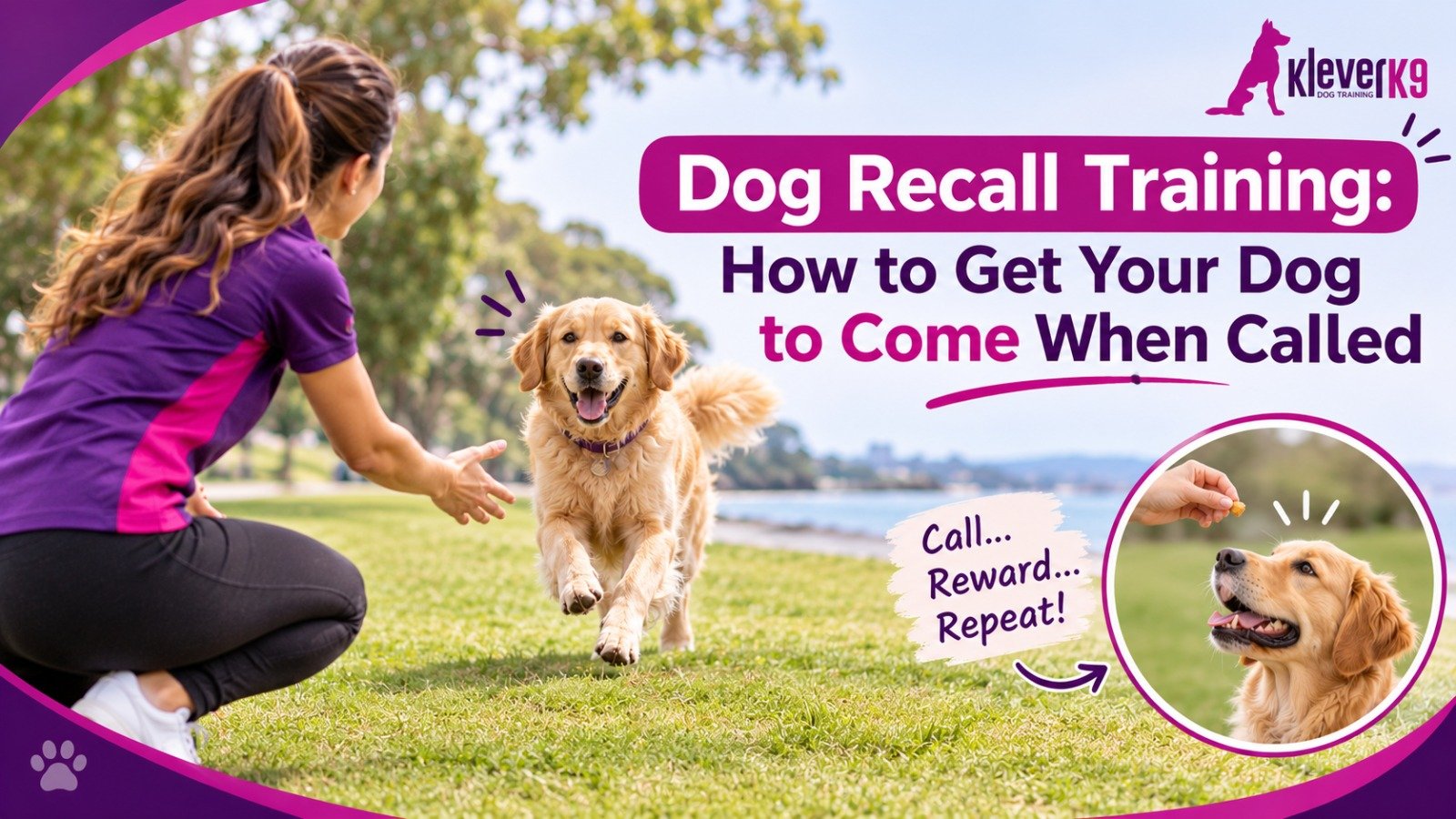
Start a short distance away in a quiet room when your dog is likely to respond. Say the cue once in an inviting voice. As the dog turns and approaches, encourage them, then reward close to you.
Use something your dog values, such as a small food reward or a brief game. The reward should happen after the return, rather than being waved as a bribe every time. Keep food suitable for your dog’s diet and use small amounts.
Try a few repetitions, then stop. You can repeat the game in another room later. A short, successful practice gives you more to build on than calling from the far end of the house while the dog is occupied with something much more interesting.
Practise the final step too
Coming within a metre, then darting away, is not the same as returning close enough to be safely secured. Gently practise touching the harness or collar, giving a reward and releasing the dog again. Keep handling comfortable.
This helps prevent every reach towards the collar from becoming a signal that the fun is over. If your dog is worried about handling or moves away sharply, work on that separately with professional guidance rather than grabbing more quickly.
Add distance before adding excitement
Once the response is easy at close range, increase distance gradually within a secure space. Move to another room or a quiet enclosed garden. Change one part of the exercise at a time so you can see what your dog finds difficult.
A dog who responds across the lounge room has not yet learnt to come away from a running dog. That is a much bigger increase in difficulty than adding another few metres at home.
If the response becomes slow or uncertain, return to an easier setup. Progress is not a straight line, and a difficult day does not erase the work already done. Sleep, excitement, discomfort and the environment can all affect how well a dog responds.
Use a long line carefully outdoors
A suitable long line attached to a well-fitted harness can allow more room to explore while keeping physical control. Practise in an open, low-distraction area where dogs are permitted and local rules allow your chosen setup.
Keep the line away from other people’s legs, cyclists and places where it can snag. Do not wrap it around your hand or let the dog build up speed before hitting the end. Ask a trainer to show you safe handling if the equipment is unfamiliar.
Call when your dog has a realistic chance of responding, reward the return and often allow more exploration afterwards. The long line is a safety measure, not something to use for repeatedly hauling the dog back after an ignored cue.
Avoid making the cue predict disappointment
If every recall ends the walk, your dog may become reluctant to return. Practise calling, rewarding and releasing them back to an appropriate activity. Many returns can then be part of the outing rather than its ending.
The final recall still deserves a good reward. Clip the lead on calmly and leave without frustration. Never punish your dog after they return, even if it took longer than you wanted. You want the arrival beside you to remain safe and worthwhile.
If you need to do something your dog dislikes, such as giving medicine, avoid using your carefully trained recall to spring a surprise. Plan appropriate handling and separate positive training around the procedure.
What to do when your dog does not respond
Repeating the cue louder and louder often adds noise without improving understanding. Instead, reduce the challenge. If you are safely managing the dog on a line, move closer, get their attention and help them succeed at an easier distance.
Avoid chasing in a way that turns the situation into a game. In a genuinely unsafe situation, focus on recovering control and getting help rather than trying to complete a training exercise. Afterwards, change the setup that allowed the risk.
Keep a brief note of what was happening when the recall failed. A moving dog, food on the ground and a family member arriving may require different practice. This gives a trainer something specific to work with.
Know when off-leash practice is unsuitable
Use enclosed spaces and controlled practice until your dog has a strong history of responding around relevant distractions. Even then, obey local restrictions and keep the lead on near roads, wildlife and other hazards.
Bayside beach and reserve rules differ by location and season, so check current signs and council information. Permission to use an area off lead does not remove the responsibility to keep your dog under effective control.
Dogs with a strong chase response, marked fear or a history of running away may need an individual management plan. Klever K9’s recall and off-leash training services can provide a structured way to work on the situations your dog finds hardest.
Keep rewarding the skill you rely on
Once recall improves, continue practising during ordinary weeks. Mix easy returns with carefully chosen harder ones, and keep particularly valuable rewards for challenging successes. There is no need to make every repetition a test.
The aim is a dog who willingly comes all the way back and lets you regain control. Build that response patiently, and keep using a lead whenever the setting asks more of your dog than their training can reliably deliver.