
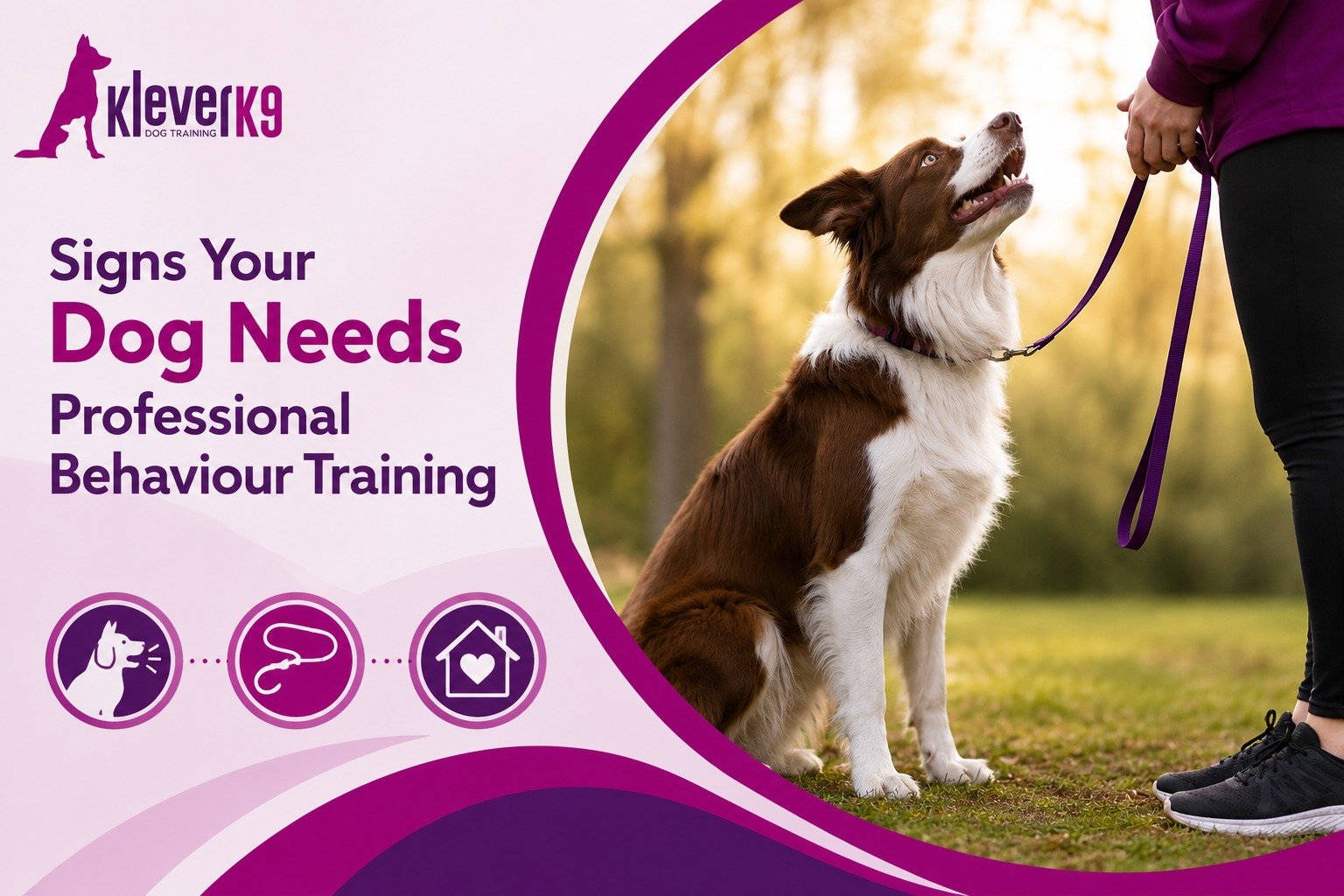
Most dog owners know their dog has ‘some quirks.’ Maybe he barks a lot, or she pulls like crazy on the lead, or there’s that one thing he does around strangers that you’ve been quietly hoping he’ll grow out of. Sometimes quirks do sort themselves out. But sometimes they’re signals worth paying attention to.
Here are the signs that suggest professional behaviour training is worth doing sooner rather than later.
Pulling on the Lead Has Become a Physical Problem
Lead pulling is probably the most common dog behaviour complaint, and a lot of owners just accept it as normal. But beyond the inconvenience, persistent pulling can cause neck and shoulder injuries in dogs, make walks genuinely difficult for people with reduced mobility or strength, and create a dog that’s increasingly difficult to control in public.
If walks have become a battle or you’ve changed your routine to avoid certain situations because of your dog’s pulling, that’s a sign training would make a real difference.
Reactivity to People, Dogs, or Specific Triggers
A dog that lunges, barks excessively, or becomes very difficult to manage around other dogs, cyclists, skateboards, or certain types of people isn’t just being difficult. Reactivity is usually rooted in anxiety or frustration, and it tends to get worse without intervention.
Reactive dogs are often misread as aggressive dogs, and while the distinction matters, both situations need professional guidance. If your dog is consistently reacting in ways you can’t manage or predict, training can help identify the trigger, understand what your dog is communicating, and build a response plan that actually works.
Resource Guarding
Growling, snapping, or showing teeth when someone approaches food, toys, a sleeping spot, or even a person they’ve bonded to is called resource guarding. Some guarding behaviour is normal in dogs. But when it becomes intense or unpredictable, especially in homes with children, it’s a safety concern that needs professional guidance rather than guesswork.
Resource guarding doesn’t usually resolve itself. Without addressing the underlying anxiety that drives it, the behaviour typically escalates. This is one situation where you really want someone with proper experience to assess and guide the process.
Separation-Related Behaviour
If your dog becomes distressed when left alone — howling, destructive behaviour, toileting indoors, refusing to settle — that’s worth taking seriously. Separation anxiety exists on a spectrum from mild to severe, and the management approach varies depending on where your dog sits.
It’s also worth knowing that what looks like separation anxiety is sometimes something else — boredom, excess energy, or a conditioned pattern that’s developed because of inconsistent routines. A professional can help distinguish between them, which matters because the solutions are quite different.
Jumping Up That’s Become a Problem
Puppies jump up and most people find it endearing. Adult dogs that jump on every visitor, knock over children, or create problems with elderly family members are a different situation. Jumping is one of those behaviours where inconsistent management from different household members makes it worse over time.
If everyone in the house has tried different approaches and the jumping continues or has got worse, a structured training program establishes a consistent framework that actually gets results.
You’ve Tried and It’s Not Working
Sometimes the sign you need professional training is simply that you’ve tried what you can think of and it hasn’t improved. That’s not a failure — it usually just means the problem needs a different approach or a professional eye to identify what’s actually driving the behaviour.
Good trainers don’t just tell you what to do with your dog. They teach you how to read your dog better, understand what’s motivating the behaviour, and develop skills that extend beyond the specific problem you came in with. That’s the lasting value of professional training.
Earlier Is Generally Better
Behaviour problems don’t usually resolve on their own, and they often compound over time. A dog that’s been practicing an unwanted behaviour for three years has much more history to work through than a dog of six months.
If you’re on the fence about whether something is serious enough to warrant professional help, the honest answer is: if it’s bothering you or affecting your dog’s quality of life, it’s worth addressing. The earlier you do, the easier it tends to be.