
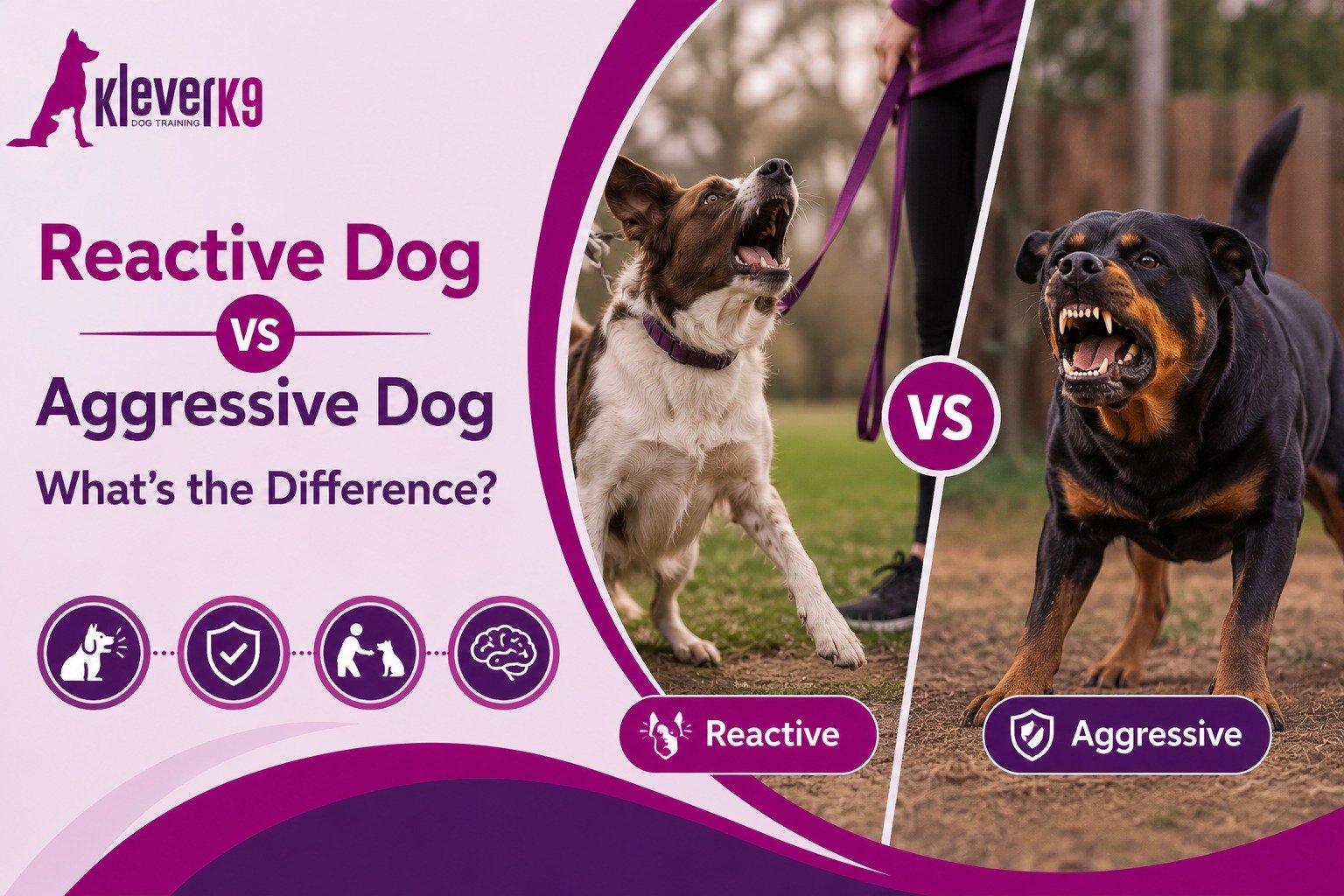
These two terms get used interchangeably all the time, and the confusion is understandable — from the outside, a dog that’s lunging, barking, and generally losing its mind can look pretty scary regardless of what’s driving it. But the distinction matters because the causes are different, the experiences are different, and the approaches to working through them are different.
What Reactivity Actually Is
A reactive dog is a dog that overreacts to specific triggers. Those triggers vary — it might be other dogs, strangers, children, cyclists, cars, or specific sounds. The reaction is usually intense: barking, lunging, spinning, and in some cases snapping if the trigger gets too close.
What’s important to understand is that reactivity is most commonly rooted in anxiety or frustration, not in a desire to harm. Many reactive dogs are actually fearful. The explosive outburst is a distance-increasing behaviour — they’re trying to make the scary or overwhelming thing go away. Others are frustrated greeters: they desperately want to get to the thing they’re reacting to (usually another dog), and the lead restraint makes that frustration come out in an extreme way.
Neither of these dogs is trying to be aggressive. They’re struggling to cope.
What Aggression Actually Is
Aggression is more specifically about intent to harm. A genuinely aggressive dog isn’t just reacting — it’s moving toward a target with the goal of biting or driving something away through threat and force.
True aggression usually comes with a different set of signals than reactivity. Stiff body posture, a fixed gaze, a slow deliberate approach, and a quiet intensity are often more concerning than loud reactive outbursts. Dogs that are growling softly and staring are sometimes more dangerous than dogs that are barking loudly — the noisy dog is communicating; the quiet one may be closer to acting.
Aggression can be triggered by fear (fear-based aggression), pain, resource guarding, territorial behaviour, or predatory instinct around small animals. Understanding which type is present affects how it’s addressed.
Why the Confusion Exists
The two can overlap, and that’s part of why the line gets blurry. A reactive dog that’s consistently pushed past its threshold — repeatedly exposed to triggers at close range with no way to escape — can develop aggression over time. The anxiety that drives reactivity can eventually produce a dog that stops trying to communicate and just bites.
This is one reason early intervention matters. A reactive dog addressed early is usually much more manageable than one that’s been inadvertently pushed into more serious behaviour over months or years.
Why It Matters for Training
The reason the distinction matters practically is that the management and training approach differs. Reactive dogs often respond well to desensitisation and counterconditioning — gradually building a positive emotional response to their triggers at manageable distances. The goal is to change how the dog feels about the trigger, which changes the behaviour that follows.
Dogs with genuine aggression need more careful assessment before any specific protocol is implemented. In some cases, management (keeping the dog out of situations that provoke aggression) is the priority rather than attempting to modify the behaviour. In others, behaviour modification under qualified guidance is appropriate.
Applying a reactivity protocol to a genuinely aggressive dog, or treating an aggressive dog as simply reactive, can produce poor outcomes or increase risk. Getting a proper assessment from someone who knows the difference is worth doing before you invest time and energy in an approach that might not fit.
A Note on Labels
It’s worth being careful about how labels land on dogs. A dog described to potential adopters, other owners, or care staff as ‘aggressive’ carries a different weight than ‘reactive.’ Mislabelling can affect how people handle the dog, how much patience they extend, and in some cases, decisions about the dog’s future.
If your dog has been described as aggressive and you’re not sure that’s accurate, a second opinion from a qualified behaviourist is a reasonable thing to seek. And if your dog is genuinely reactive, understanding that distinction can help you feel more equipped to work with them — because reactivity, treated properly, has a very good prognosis.